Moon Water Dojo
  • Home
  • Essays By Ed Shozen Haber
    • Birth and Death
    • Emptiness
    • Practice
    • Port Townsend Sutra
    • Response to a Conversation
    • A Life of Practice I
    • A Life of Practice II
    • A Life of Practice III
    • A Life of Practice IV
    • A Life of Practice V
  • Schedule
  • contact
  • Blog

Bodhisattva Vows IV

5/26/2014

0 Comments

 
          We are finally up to the fourth Bodhisattva vow:


The Buddha’s way is unsurpassable 
 I vow to become it. 

          This seems clear, but  how can we become the Buddha way and not just follow the Buddha way.  The first three Bodhisattva vows are a shortened version of the Buddha way; help other beings, eliminate selfish desires and embrace each moment, but as long as we self-consciously follow this path we are not quite fulfilling the Buddha Way.  This last vow is to push us to the completion of this path we call Buddhism.  But then to believe that we can ever as individuals complete the path is a mistake.  This is a lifetime commitment.  
          I had just formally finished my training and been given the authority to teach Zen at the previous meditation retreat.  And though all these years of practice had changed me and given me a completely different view of the world and my self this did not mean that I was beyond selfishness or being upset at times.  After returning from the retreat, after the samadhi wore off I returned to a more normal state of mind, I found that I was not beyond an occasional fight with my wife and being upset by certain events, and I certainly was thinking a lot again.  I  did not feel that my need to practice had ended so I went to the next sesshin.  At sanzen during the next sesshin Harada maybe a little surprised I was there says to me, "A single lifetime is too short to completely polish the mind."  Even though I have had several dramatic Zen experiences while sitting and not sitting I still feel a need to practice an awful lot.  There is no conclusion to this practice.
          I have changed in some very important ways and this leads me to another interpretation of this vow.  If you read this blog and my essays you will notice some repeated themes.  I write a lot about experience in meditation,  I write a lot about dropping the concept of self.  And I also write a lot about what is sometimes called the True Self or the Large Self.  If in our practice we are successful in dropping our concept of self and our dualistic way of thinking then, a whole new non-dual way of seeing opens up.  We call this way of seeing the world,  the True Dharma Eye, the eye of non-duality.  With this eye we see the whole Universe as a single thing, a single being, a single life.  Zen and Buddhism is not about dropping our thoughts and dropping our concept of self and entering a sort of zombie existence of total absorption in some object of concentration.  Sometime we Buddhist teachers teach our students to do just that, enter total absorption, but that is just a means to an end, the end being the opening of the Eye of Non-Duality.  Once this eye is open,  instead of not thinking about our self at all a new understanding of the self opens.  We identify with the single life of the Non-Dual, the Whole Universe.  This also doesn't mean that we completely forget about ourselves as individuals.  Again, it just opens up a new understanding of ourselves as individuals. 
           Early Buddhist philosophers said there were three ways a Buddha thought of him/herself.  This was expressed in the idea of the Trikaya, the three bodies of the Buddha.  You can look it up but here is its essence.  The first is the Buddha as an individual person. This is the Sambhogakaya, which translates as "bliss body", which refers to the individual's happiness that results from enlightenment  Yes Buddhas are supposed to be happy this is the individual result of their realization.  I think it is important to remember that Buddhas are also people, with personality and individual quirks, and quite capable of making mistakes.   In some sense we are all Buddhas, just some of us are an experience and realization away from understanding this and actualizing as a Buddha. 
          The second way a Buddha thinks of him/herself is to identify him/herself with other beings.  This is the source of a Buddha's compassion, to not only think of himself as an individual being but to understand and experience the deep connection between all beings.  This is a deeply experienced understanding and I am using the word beings in the broadest sense.  In Zen we frequently say, become one with this or that.  Become one with the breath.  Become one with our pain.  Become one with the sound of the river. Become one with other people.  This experience allows us to become one with other beings as well as other things.  This goes back to the third vow of mastering all dharmas.  With this experience and the resulting understanding we now identify ourselves with all other beings whether saint or sinner.  All beings exist within my True Self.  Knowing this I can truthfully say that I manifest as all teachers of Buddhism as well  as all mass murders.  We all share the same body.  This is called the Nirmanakaya translated as the "transformation body". 
          In reading the Paranirvana Sutra, Shakyamuni tells his disciples not to grieve over his imminent death because he will still be with them through his teachings, thus we know he identified with his teachings.  This is also a way we can understand the Nirmanakaya 
          The third body of the Buddha is the Absolute Body the Dharmakaya  This is the Body which contains everything and is the True Self.  From this absolute perspective not an individual thing exists.  There is no division, no eyes, no ears, no nose, no sound, no smell, no body, no mind.  This is the experience and understanding presented in the Heart Sutra.  Yet we humans naturally divide the world into a multiplicity of things.  We may have an experience of the Absolute but this cannot be where we live our lives.  We can understand the Dharmakaya as the deeper truth and thereby it can form the background for our experience and understanding.  Thus we live in duality experienced through the the eye of non-duality. 
          This practice of ours is not just about ending any concept of our individual selves. Yes, we are asked to do this temporarily in meditation. Ultimately we transform our understanding of ourselves as individuals, so that we see ourselves through the eye of non-duality.  We may view this as fulfilling the fourth vow and become the Buddha Way.


Realizing the thought of no thought as thought, 
whether singing or dancing, we are the 
voice of the Dharma.*

* From Hakuin's Song of Zazen

0 Comments

Bodhisattva Vow III

5/19/2014

0 Comments


          Hi out there in blog land.  I am not sure anyone is actually reading this blog but the stats on this site is that 20 or so people come to this site each day.  Maybe most of you are just surfers.  No one has added comments.  If you wish to comment on anything I have written feel free and maybe we can start a conversation.

The Dharmas are boundless 
 I vow to master them.

          This is the third Bodhisattva vow and it is confusing like the other two.  Most people in the West think that the word Dharma's in this vow means  Buddhist teachings and some translations of theses vows directly translate this vow this way.  But if you read up on ancient Buddhist philosophy the word dharma is used very differently. (Conze's Buddhist Thought in India is a good read on this subject)  Dharma can be translated as sense object or sense experience.  It can also be translated as a true constituents of reality.  Buddhism taught from the beginning that the way the world appears to us is a delusion.  It appears to us delusively because of our delusive way of thinking.  It was understood that through meditation we could experience the world without delusion..  Such words as dharma and suchness referred to an experience of the world untainted by delusive thought.  To experience the world without the taint of delusion was to realize the Dharma.  Now we can understand how the word Dharma transformed into meaning the teachings of Buddhism. The Dharma refered not so much to the core teachings of Buddhism but the core experience of Buddhism.  The true Dharma cannot be put into words but must be experienced.  
          There is an other translation of this vow which goes:

The Dharma Gates are boundless
I vow to master them.

 I like this translation because the wording Dharma Gates better conveys what I think is the meaning of this vow.  What is a Dharma Gate?  Well anything can be a Dharma Gate and that is just the point.  If we read many of the stories of enlightenment we realize that just about anything can precipitate an enlightenment experience,   There are stories of people being enlightened by punches, shouts, the sound of a pebble being kicked, the sound of snow falling, the following of the breath, chanting, and on and on the stories go.   Every experience every moment is a  Dharma Gate.  If we can for even a moment experience without delusion then we have mastered the Dharma Gate which is that moment.            There is a Zen story (koan) in which Zen master Zuigon every morning sits upon a rock and says to himself "Master, let me not be fooled today."  Such a strange story, but really it is just about a man who reminds himself not to be caught in delusive thinking.  And is this not the same as the vow to master all Dharmas?
          Again and again I come back to experience in my essays and these blogs, which is because Zen and Buddhism is really about experience, not a bunch of intellectual ideas.  All the verbal teachings are peripheral, just helping point one towards the central experience of Buddhism, enlightenment.  I know I know the first Noble Truth is "right understanding"  but that understanding must start with experience otherwise it is just a bunch of words running through our heads and that can be dangerous.
          I look around at the various schools of Buddhism and see that some of them have built large intellectual edifices,  the "path" is laid out in explicit detail.  Philosophic explanations of suffering, and delusion and the meaning of such words as "emptiness" are laid out in explicit detail.  And there are also explicit behavioral rules. and many articles of faith such as reincarnation.  For many, this is Buddhism and I guess this is what people want, this is how you build a religion.  But this reminds me of a couple of old sayings:
 "Organized religion is designed to prevent people from having a religious experience", and "the map is not the territory."
          The core of Buddhism is that experience that Shakyamuni had 2500 years ago sitting in meditation under the Bodhi Tree.  And he made it eminently clear that this is an experience that all people can have and that he was teaching people how to have this experience.
              And then many people think that all a person needs to do is have an enlightenment experience and they are enlightened but that is also too much of a simplification.  As the Sixth Patriarch of Zen put it,  A person is enlightened when they have an enlightened thought and deluded when they have a deluded thought.  All delusional thinking is not ended with one experience.  The real trick is to learn to come back again and again to this clear un-deluded place of enlightenment.  Remember, Shakyamuni practiced meditation throughout  his whole life, returning again and again to that same clear state of mind of enlightenment.
          Master a dharma, master a moment, how do you do that?  Well, in meditation we sit until we clear our minds of all delusions which means pretty much empty our minds of all thoughts.  But sitting on the meditation cushion is only a small portion of our lives.  How do we master dharmas in our every day lives?  The answer is simple but just as difficult as emptying our minds during meditation.  Embrace each moment  Simply do what you are doing without self consciousness, without extra thoughts.  This is the practice, but sometimes it is a lot more then just the practice.  The other morning I took a walk on a slightly foggy day and I was overcome by beauty and filled with joy.  Is this not mastering a dharma.  This is not practice.  Thinking "practice" is to be self conscious.  The true practice is to drop all thought of practice and to be absorbed in the moment.  But it was also something more then just being absorbed in the moment because in that moment I knew that I was looking at myself, that the trees and plants, flowers, houses, Puget Sound seen through the mist, the mist itself and the people in the houses, the whole shabang was just Me.
          In the second vow to end all desires and the third vow to master all dharmas I see the positive and negative aspects to the same practice and that same state of mind in which the practice is realized.  The practice is simple to express, forget the self, drop all selfish desires, and embrace each moment, everything we do and feel and think.  The realization of the practice is that state of mind in which without effort selfish desires are forgotten and each moment is naturally embraced.


0 Comments

Bodhisattva Vow II

5/13/2014

0 Comments

 
Desires are inexhaustible 
 I vow to put an end to them

          There is a person who comes to sit at the Moonwater Dojo most weeks who has a very difficult time with this vow.  She doesn't buy this vow, why would a person want to desire nothing?  We must desire food and water or we die.  We need to desire sex or the species dies.  And then doesn't passion give life meaning?  Today in our society it is often felt that we need to live our passions to be happy.  This vow seems to go against the most obvious truths recognized by our society.
          In the Theravada tradition the Buddhist path is often called "the path of perfection" and enlightenment is often thought to be the complete elimination of desire.  This vow seems to put Zen in the "path of perfection" camp.  Yes, I think this is correct in a certain way.  Maybe the emphasis is a bit different then in Theravada which in SE Asia is primarily a monastic tradition though in the West Theravada has been transformed into a lay practice.  In a monastic setting one can make a whole sale assault on desire.  The Mahayana tradition has always been more open to lay practice.  In some Mahayana Sutras the Bodhisattvas like Manjusri were lay followers of the Buddha. The monks were called Bhiksu or Bhikkhu.  Some people think that the Bodhisattva path was originally a layman's path.  Today in Japan Zen is mostly a monks path though there is nothing stopping the layman from being a serious practitioner and the Pure Land sects which are Mahayana have mostly lay practitioners.  Thus there is a difference when a follower of the Bodhisattva path tries to end desire and when a Theravada monk tries to end desire.  The Bodhisattva path starts with the desire to help others and lay people need a certain amount of desire to help direct their lives.  Without any desire a person becomes non- functional and might as well be a monk.  And yet in a certain way the Buddhist paths cannot be accomplished without ending desire at least temporarily.
          This reminds me of a story.  Many years ago I was hanging out with my buddy Neils talking about Buddhism and he says to me that it is impossible to be completely with out attachment.  There will always remain the attachment to being unattached.  I tell him that this is not true.  Yes you cannot end attachment with being attached to being non-attached but that there is simply a state of mind that is without attachment.  The same can be said of desire.  There is a state of mind without desire and it is the same state of mind that is without attachment and this state of mind is significantly different from our normal state of mind filled with attachments and desires This state of mind cannot be gotten to by simply practicing non-attachment and eliminating desires and yet the practices of non-attachment and eliminating desires is very helpful in eventually experiencing this state of mind which we all know has many names,  samadhi, kensho, satori, nirvana, enlightenment.
           I have heard that the Tibetan Vajrayana path of Buddhism (Vajrayana Buddhism is within the Mahayana.) is able to embrace desire and attachments and utilize them in the Buddhist path.  One thing is that desire and attachment can have the effect of concentrating the mind.  Certainly the passion, energy and practice a great artist or athlete puts into their craft often propels them into a type of samadhi.  My own experience is that during the period when I first experienced a deep Zen samadhi I was also becoming passionately involved with my future wife. yet when I went to sesshin (zen retreat) I was able to leave everything behind.  
          The conclusion is that I told this person I sit with that it is important to drop all desires in the practice of Zazen.  In the rest of life it is ok to have some desires.  Certainly the desire for enlightenment propels our practice.  But if one is somehow to experience enlightenment he/she must completely drop desire as they must also drop all attachments, and all thoughts for a period of time.  And if one can go as far as to experience this state of mind, when it is over they will find their whole way of thinking and motivations realigned. The Bodhisattva path becomes more then something we intend to practice but rather the natural direction of our thoughts and motivation.
          
0 Comments

The Bodhisattva Vows 

5/8/2014

0 Comments

 
The Bodhisattva Vows 

Sentient beings are numberless 
 I vow to liberate them. 
Desires are inexhaustible 
 I vow to put an end to them. 
The Dharmas are boundless 
 I vow to master them. 
The Buddha’s way is unsurpassable 
 I vow to become it. 

           These are the four Bodhisattva vows used in Zen  I don't know where they came from though they are probably of ancient origin.  There are many versiions of these vows. Each of the large sangas seems to put their own twist on these vows.  This is the translation that the One Drop Sanga uses.  There are also other completely different  Bodhisattva vows used in other Buddhist traditions.

          The first vow is to liberate all sentient beings.  The early translations of these vows uses the word "save" instead of liberate.  This give the vows a Christian feeling and is rarely used now to avoid this confusion.  To be "saved"  means something very different for most Christians then "liberate" means for most Buddhists.  We Buddhists have our own vocabulary for the fulfillment of Buddhist Practice; liberation, enlightenment, nirvana, etc..  And then a Buddhist can never be sure of what these terms mean unless he/she has fulfilled the Buddhist path and actually experienced what these terms refer to.  Christians usually have a much clearer idea of what being saved is.
           From the first vow we are thrown into confusion.  The task is impossible.  There are essentially an infinite number of sentient beings to liberate.  And how do we liberate even a single sentient being when we ourselves are not liberated?  And by the way what is a sentient being?  Obviously we humans are sentient beings but do you have to be as intelligent and feeling and capable of liberation as a human to be a sentient being?  Are dogs sentient beings, can  they be liberated or are they already liberated?
          Even without a thorough understanding of this  first vow we can understand that it asks us to do the simple things to save other beings.  To be kind and work towards relieving others suffering even knowing that anything we do as an individual will not be permanent. Yet every action we take has effects that go far beyond the immediate result of the action.  In some sense we are building a kinder happier world one kind act at a time.  We all have a tendency to think "me first, me first" but the Bodhisattva path is to say, "You first."
          Sometimes a Zen student is given the Koan  "How do you save all sentient beings?" Like all koans we initially want to think about the question but no that wont work.  Zen is all about meditation so eventually we forget about trying to come up with some smart intellectual answer and just continue sitting and then if the sitting goes deep enough we have an experience that answers the question.  The answer does not come out of our normal dualistic perspective but only a non-dual perspective in which an independent being does not exist.  This reminds me of the last section of Dogen Zenji's Genjo Koan


          Zen master Baoche of Mount Mayu was fanning himself. A monk approached 
and said, "Master, the nature of wind is permanent and there is no place it does not 
reach. Why, then do you fan yourself?" "Although you understand that the nature of 
wind is permanent;" Baoche replied, "you do not understand the meaning of its 
reaching everywhere." "What is the meaning of its reaching everywhere?" asked the 
monk again. The master just kept fanning himself. The monk bowed deeply. The 
actualization of the buddha-dharma, the vital path of its correct transmission, is like 
this. If you say that you do not need to fan yourself because the nature of wind is 
permanent and you can have wind without fanning, you will understand neither 
permanence nor the nature of wind. The nature of wind is permanent; because of that, 
the wind of the Buddha's house brings forth the gold of the earth and makes fragrant 
the cream of the long river. (This translation is from the San Francisco Zen Center web site http://www.sfzc.org/sp_download/liturgy/24_genjo_koan.pdf  )

           Just as the wind is permanent but is not felt without a fan so the great perfection which is the Universe is not experienced without practice.  In this great perfection all beings are enlightened and yet most suffer in the ignorance of their true nature which as Hakuin Zenji said is "no nature."


0 Comments

May 04th, 2014

5/4/2014

0 Comments

 
Bodhisattva 1

          Hi Everyone, onward ho,  I am enjoying writing these blogs.  This next set of Blogs will be on the Bodhisattva ideal and the Bodhisattva vows. Lets begin.
          If you are reading this you probably know Buddhism is divided into two primary schools.  Hinayana and Mahayana.  Hinayana means "small raft"  and Mahayana means "large raft."  Within these primary divisions there are and were many many subdivisions.  Today there is one surviving school of the Hinayana  called Theravada Buddhism, and many surviving schools from, Tibetan Buddhism to Zen, of the Mahayana.  The primary difference between Mahayana and the Hinayana is that the Mahayana schools teach the Bodhisattva ideal and the Hinayana does not.
          The most difficult barrier on the Buddhist path is the conception of a small self the "I". No- self is a fundamental teaching of Buddhism but how do we transcend the self when the self is so deeply ingrained in our thinking and seems to be the motivator even for our practice of Buddhism?  The Buddha said to use fire to put out fire, fire being the the concept of self,  The Buddha gave many a talk in which he equated the concept of self  with a fire which is burning us causing immeasurable suffering.  Usually the concept of self is translated as "ego" and this has lead to a misunderstanding by many Buddhist practitioners in the West because we do not think of ego as so much the concept of self but rather as thoughts of exaggerated self importance and specialness.  These people do not  want to give up a concept of self, just  their egotism.   This is a wrong reading of Buddhism because the non-atman doctrine tells us that the self does not exist.  But it does not exist in the way that all things don't exist.   Things  don't exist because they are impermanent, ever changing.  Even a rock is not the same rock moment to moment.  Forces are changing it and wareing it away.  Wind and rain carry off atoms, The sun and rain transform atoms and there are internal atomic and subatomic processes that are also constantly changing the rock.  Humans are impermanent ever changing, constantly replacing atoms, aging, healing and breaking down .  Our minds and our bodies are in constant motion.  If a rock is ever changing we are certainly ever changing.  In some ways we are more like a river then a rock.  Can we say we are the same person moment to moment?  There is a second way in which all individual things don't exist.  Individual things don't exist as truly separable from the single whole that is the Universe.  We might say that all things are part and product of an almost infinitely complex web of causation which stretches from one end of the Universe to the other.  Which is why all things are impermanent and ever changing.  This is an intellectual and mechanistic reason but our non-separableness can also be experienced and without this experience our understanding of Buddhist Teachings will never be complete. And it is this experience which is so difficult to manifest
          We humans carry around a deep sense of our individuality our separateness, our specialness.  We obsess over it and we intellectually justify it.  Many of us believe we each have something inside us which we call the soul which is permanent and does not die, which confers upon each of us individual specialness.  The Buddha categorically denied this.  He understood our sense of self to be  nothing more then a way of thinking, an internal response to external stimuli. 
          The Twelve Fold Chain of Interdependent Origination, one of the more obscure of the Buddha's teachings was his attempt to show that through our ignorance a whole chain of thought in response to stimuli is constantly reinforcing an ignorant idea of the self.  The Twelve Fold Chain deserves it's own blog but not now.
             Though I have to say that a complete denial of things and ourselves is not quite correct because there is a certain  recognizable continuity in time and space to ourselves and other things.  And it may even be natural for us humans to divide the world up into individual things and individual beings but in Buddhism we believe that this tendency to divide reality up has created a deeply flawed way of thinking and understanding of ourselves in relation to that reality.  And in Buddhism we don't want to destroy any idea of self but rather experience and understand its illusory nature because the individual self is a useful distinction, just not fully accurate
          In the Hinayana schools the emphasis has always been on individual effort in the search for individual liberation.  This was emphasized by the Buddha in several Sutras.  Shortly before his death in the Paranirvana Sutra he says that each individual must be a "light unto your self", individuals attain liberation through their own discipline and effort.  The Buddha believed in the self as a useful fiction in our motivation to practice.  But this is a double edge sword. We come back to the original problem.  If Buddhist liberation is to experience selflessness how can we do that with such a strong emphasis in practice on our own individual selves?  Already in this country we have many people who have been practicing meditation for many many years and many of these people have never had a deep  experience of selflessness, why?  Maybe most of these people practice with a selfish attitude.  They want to attain something.  "I want to be happy." "I want to discipline my mind so I may be better at work."  "I want to attain enlightenment."  How can you let go of the "I" if the I is always in your thoughts.
          The Mahayana was a response to this issue.  In the Mahayana the ideal is the Bodhisattva who selflessly practices so that all beings may attain liberation.  The Bodhisattva path is to practice selflessness.  The Bodhisattva path is to drop thought of self in both meditation and the other activities of life and function for the good of others.  The ideal of the Bodhisattva is one who delays one's own liberation until all other beings are also liberated.  And yet if one completely and truly practices the Bodhisattva path for even a few moments then that person is already liberated because Buddhist liberation or enlightenment is to be liberated from the self.  And if one truly understands this then they will discover that with one person's liberation the whole Universe becomes liberated.  
         Even the Bodhisattva path has problems because though it embraces selflessness it misses the other side of the equation.  True selflessness can only exist in non-duality where neither an individual or a Bodhisattva exists
         
0 Comments

April 15th, 2014

4/15/2014

1 Comment

 
         I have been reading The Ancestor"s Tale by Richard Dawkins.  It traces our evolution as humans back in time to the beginnings of reproductive life on this planet.  It is quite a monumental book though with the speed at which our knowledge of genetics is advancing it is possibly out of date at an age of 10 years.  Any way it is still a fascinating book and it has made me think about our evolution, though it has been one of the themes of my thought for many years.
          In my youth I thought I was going to become a scientist and I studied physics in college but some how my path didn't take me in that direction.  Yet I try to approach Zen and Buddhism with the openness and also skepticism of a scientist.  My impetus towards Buddhism was not to be happy or find spiritual comfort or to find something I could believe in but rather was an exploration in the spirit of science into the nature of the Universe and our place in it.  My laboratory is meditation and the results I have experienced are reproducible for other dedicated meditators.  Zen is not like other religions which present a faith in a body of reveled knowledge.  The practice of Zen is quite literally to forget everything we might think we know about anything, to give up all the underpinnings of our thought to be reborn again and see with fresh eyes.
          Richard  Dawkens is also famous for arguing against religion as irrational and for a scientific rationalism.  I don't in general disagree with this argument  Even Buddhism has problems with irrational belief yet I wonder if anybody has properly explained to him the essence of Buddhism. Also science has problems of irrational belief, or more properly narrowness of perspective.  And why shouldn't it, it is still caught in a way of thought that was molded by evolution for evolution's purpose. Not that evolution has conscious purpose but it exhibits purpose in it's mechanism and direction.
          Some where in the evolution of the many life forms long before the evolution of the human life form conscious intelligence developed.  It survived because it served the purpose of survival.  Again as conscious intelligence evolved and became more powerful self conscious intelligence developed still serving the purpose of evolution. By self conscious intelligence I mean that it looks back upon itself and forms an idea of a self, a unit that involves a body and a mind.  This unit takes upon special importance because it forms the locus for all the evolutionary pressure to survive and all our desires and  our whole way of thinking serve this purpose.   We humans think we are somehow above the mere animal but observe how everything we do serves evolution.  We are filled with desires that drive us to survive and thrive and reproduce.  We are filled with selfish desires that obviously help us survive but also our altruistic desires help us survive by creating a safe society, and a safe larger world
          Maybe in some ways we seem to transcend evolution in our love of beauty which motivates the artist and our sense of wonder which motivates the scientist.but again it is not hard to see how these impulses benefit society and have survival value.  Maybe even zen has survival value.
          For the purpose of this essay I want to return to consciousness, the idea of a self, and the foundation of our thought.  At some very early stage in our lives we consciously identify the unit we call the self.  It is the self that gets hungry, it is the self that gets cold, it is the self that desires food and warmth. nature and evolution points right to the self and being the intelligent creatures we are we identify our selves.  This identification starts a psychology of division.  There is self and other and then shortly the Universe is divided up into the 10,000 things, We develop a dualistic way of thinking about things and it all hinges on that original identification of a self.  This dualistic way of thinking seems natural and correct.  Why would we question it?  We don't even know how to think in a way that isn't dualistic. Language and mathematics are based in dualism We are all caught in the assumption of dualstic thought, the poet and the scientist.  I say we are "caught" because my experience is that there is an other way of viewing the world that is not dualistic and that not quite all of us are caught in dualism.  I know this because years of experience practicing meditation has allowed me to experience the world without dualism and allowed me to understand the mechanism which makes this possible.
          Meditation is a technology.  As a spiritual practice we may not be interested in how it works and just enjoy the results but it functions with a certain mechanism.  It allows us to go back in time, slowly ridding ourselves of the habits which have formed our thinking and emotions.  In time the meditation practitioner returns to that state of mind before the self is identified.  In some sense this is returning to not just a child's mind  but a baby's mind before the identification of a self, before the world is divided up into things, before dualistic thinking.  And yet we do this with the full intelligence and consciousness of an adult.
            That first division, that first step into dualism, is the identification of a self.  The identification of a self is the foundation upon which dualistic thought developed,and this dualistic thinking permeates the whole way we see the world, including the way the scientist sees the world, including "rational thought."   By returning to a "babies mind" fully conscious, fully intelligent we view the world without duality, without division of self and others.  And from this perspective we can understand that the self is a fiction and our whole way of experiencing and thinking about the world collapses.
          You might respond that this blog uses dualistic thinking, and my response is that of course it does.  Dualism is wonderfully practical.  It is practical not "true."  It is wonderful in delineating connections between things and creating understanding but this understanding is necessarily incomplete because it leaves a whole lot out, the rest of the Universe.
          The point of this blog is that dualism is natural, programmed into us by a process we call evolution whose driving force is the survival of individual forms, and yet something also happened as our large brain and strong intelligence developed.  It became possible to step out of our evolutionary programming and see the Universe as a single whole.  Maybe this insight into non-duality has some survival value but  it is certainly a radical departure from an evolutionary perspective.
          The thing about the non-dual perspective is that it doesn't reject dualism or evolution.  It doesn't reject anything because everything just is, as temporary manifestations within a single whole, which we can call the Universe or God or Buddha or the Absolute.  And this insight into the Non-Dual is the Non-Dual's own self awareness.  How could it not be?  There are no true individual things, only the Non-Dual.  This is why insight into the Non-Dual is called "Self realization" among other names.  This Self is not the self of the individual but the Self of the whole thing, the Non-Dual, the Universe, Buddha. 
          This brings to mind one last question in the billion or so years that the process of evolution has been functioning on this planet and the  approximately 14 billion years that the known Universe has been functioning is it not possible that the direction of this activity is actually towards the Universe's own Self awareness?  This maybe a gross presumption but it is an idea found in Buddhist mythology, and espoused by many teachers. I was having tea with Harada Roshi and several of his students when he tells one of the Buddhist myths of Universal enlightenment and then says to us it is possible to perceive this as the direction of Universal activity.  This is also a perception not unknown to many scientists who ask themselves why are they so curious about the nature of the Universe and answer, maybe through them the Universe is just curious to understand itself. 
1 Comment

March 26th, 2014

3/26/2014

0 Comments

 
Here is part V and the end of my Heart Sutra Comentary.


In the Three Worlds all Buddhas depend on Prajna Paramita and 
attain unsurpassed, complete, perfect Enlightenment. 
Therefore know: the Prajna Paramita is the great transcendent 
mantra, is the great bright mantra, is the utmost mantra, is the 
supreme mantra, which is able to relieve all suffering and is true, not 
false. So proclaim the Prajna Paramita mantra, proclaim the 
mantra that says: 

 Gyate, gyate, paragyate, parasamgyate, bodhi svaha! 


          Now we come to the mantra, but before I discuss the mantra I have a few things to say about the first line of this section.  The Three Worlds are the World of Form, the World of the formless, and the World of desire.  These three worlds represent the three ways that most of us humans relate to the world around us.  The World of Forms is the world of things.  Being enamored with things is to live in the World of Forms.  This can manifest in various ways from the person who likes to travel who likes to see things to the wealthy person who  accumulates lots of things.  I like tools and to build things, in this way I live in the world of Form.  There are many ways to live in the world of Form as there are many ways to live in all three worlds.  The World of  the Formless is the world of the intellect, the world of ideas.  The philosopher and the scientist live in the world of the formless.  Of course writing this I live in the world of the formless.  Lastly is the World of Desire.  This is the world of sensual pleasures and our visceral desires for sensual pleasures.  This is also the world of the hedonist.  None of us live in just one or two of these worlds.  We live in all three aspects of the triple world though individual personality and experience draws the individual into one of these worlds more then the others.
          These three broad categories are different aspects of what we Buddhists call Samsara the world of delusion, attachments, and suffering, the world that most of us live in.  It is interesting that the author of the Heart Sutra placed the Buddha in Samsara and the Bodhisattva in Nirvana.  Bodhisattvas are supposedly not as advanced as Buddhas.  One becomes a Buddha upon attaining "complete perfect enlightenment."  The Bodhisattva though enlightened is still on the path and can still fall temporarily from the the grace of enlightenment and may even choose to do so in their path of compassion.
          I think the author of the Heart Sutra is trying to emphasize that Buddhas live in the same world that we all do.  That they are just humans but also in their complete dependence on Prajna Paramita have transformed the Three Worlds into something different, Nirvana.  The third vow of the four Bodhisattva vows states; "Dharmas are inexhaustible, I vow to master them."  We might think that the Dharmas are teachings of Buddhism but in this case Dharmas also refer to our moment to moment situations in life.  Each moment is a challenge, will our minds cloud over with delusions and attachments or will they remain clear with the wisdom of Prajna?  Even for the enlightened this is a work in progress.  If there is truly something called "complete perfect enlightenment", this is when through years of practice Prajna manifests for the individual in every situation.
            The Sixth Patriarch of Zen, Hui Neng, was noted for teaching "sudden enlightenment" and what he called the Buddha Path.  This is nothing more then an emphasis on the enlightenment experience that Shakyamuni experienced and each of us has the potential to also experience, the experience of Avalokiteshvara presented in the Heart Sutra.  Yes, this enlightenment experience is sudden but it is just a single step in a path that will take a life time.  Even Shakyamuni continued to practice his whole life.  Maybe it was wise that Sakyamuni did not emphasize his experience but rather the day to day work of the Eight Fold Path.  The idea that there is  something special to achieve becomes a barrier, on the other hand thinking there is nothing to achieve can also be a barrier, a difficult problem.  The ideal of "complete perfect enlightenment" is just that, an ideal to spend a lifetime working towards.
          Lastly, if we view what I have just written from the wisdom of non-duality there is only complete perfect enlightenment functioning moment to moment.  It is the Universe's own complete perfect enlightenment.  We humans in our ignorant striving and suffering are just the functioning of Universal wisdom, Prajna.
          Now we really come to the mantra; Gyate gyate paragyate parasamgyate bodhi svaha.  
          This is a very special mantra as the sutra lets you know.  Mantras have a special power, not a magical power but special.  They work in two ways.  I wrote about one of the ways mantras work in an earlier blog.  The conscious and mindful repetition of a mantra will cut and de-energize the normal habits of our thoughts and emotions, and eventually the practitioner will enter a state of non-discrimination.  
          The second power of the mantra lies in it's meaning.  Here in the West, with most mantras coming from Asia as well as our teachers of these arts, we often don't know the meaning on the individual words of the mantras and are told it doesn't really matter.  It doesn't matter for that first way a mantra functions.  
         Sometimes our teachers tell us that it is better that we don't know a mantra's simple translated meaning but that is not correct.  It is correct that the meaning of a mantra should not be allowed to disturb our practice but rather quietly sit in the back of our mind.  The simple translated meaning of a mantra does not usually give a insight into the deep meaning of the mantra.  That happens with practice.
          When I was in my early 20's I decided to take my practice off the cushion and recite a mantra as I hiked around.  I decided to use the Tibetan mantra Om Mani Padme Hum. The simple meaning of this mantra is: Om-the universal sound and beginning of most Tibetan mantras, Mani- jewel or diamond, Padme- in the lotus, Hum- the closing sound of most Tibetan mantras.  I repeated this mantra as I hiked in the woods and I hiked in the city.  The recitation of the mantra did not easily become a habit.  My mind was always talking.  The recitation of the mantra was a strain because I liked talking to myself.  Eventually the recitation of the mantra became more natural.  It would quickly quiet my mind and bring me into a meditative state, but I still didn't have any special insight into the meaning of this mantra I was repeating, even many years latter after I had some deep experiences meditating.  
          I was at a meditation retreat (sesshin) reciting the mantra when I was not in seated meditation and then the moment of insight came.  A deeper meaning to the mantra became totally clear.  I was experiencing the meaning of the mantra in the practice of meditation but also because I became conscious of this through the meaning of the mantra my meditation immeasurably deepened through the rest of the sesshin.
          In Zen we talk about "turning words," words that bring about special insight.  This insight only happens when the practitioner is ready and is activated by some words he/she hears.  The words may be spoken by anybody or can even be some words that are sitting  in the the back of an individual's consciousness .  A mantra contains it's own turning words that is it's special power.  Koans those paradoxical questions and stories asked by Zen teachers also work on the same principle as turning words.  Koans can not be properly answered by "figuring them out" with our normal way of thinking, but that doesn't mean they don't make sense.  They make sense when we see the world in a completely different way which the koan itself can prompt us to see.  And of course turning words only work when our minds have properly ripened through practice.

Gyate, gyate, paragyate, parasamgyate, bodhi svaha! 


          What is the meaning of these turning words?  We might translate them this way: Gone, gone,  completely gone,  more completely gone, wisdom awake.  D T Suzuki translated them, "Gone . Gone, Gone to the other shore, landed at the other shore, gone for good."  Eather translation works though Suzuki's using the Buddhist metaphor of the "other shore" though less exact hints at the deeper meaning of the mantra.  The Buddhist path is likened to traveling across a river to an other shore,  The river is called the "river of life."  On one side we have our normal dualistic world view of a world broken up into individuals and things,  We are born and we die and we suffer, Samsara.  On the other side is the perspective of non-duality, with no individual things, no birth and no death, and no suffering, Nirvana.  How do we get from one side to the other?  What exactly is the Buddhist path?
          The Prajna Paramita mantra is both a description of the Buddhist path and an instrument for its passage.  "To study the Buddha way is to study the self. To study the self is to forget the self.  To forget the self is to be enlightened by all things."  this is the Zen master Dogen's description of the Buddhist path and it differs little from the path as discribed by the mantra.  To be "gone" is just to forget the self.  In meditation we forget the self with each breath or each recitation of the mantra.  Embracing the activities of everyday life we forget the self.  We forget the self through the practices of mindfulness and concentration.  We forget the self in compassion, love and generosity.  Of course it is not that easy but this is what we work towards.  And even if we have had a moment of completely forgetting the self and have an enlightenment experience we continue our practice of forgetting the self again and again and again.
          Our whole dualistic way of thinking, our suffering, our attachments, Samsara hinges on our attachment to our idea of self.   Nirvana, the other shore, is that place where all attachment to an idea of an individual self is dropped. And through that dropping of an idea of an individual self a whole new non-dualistic perspective opens.  The vehicle that takes us from one shore to the other is forgetting the self.
          So ends my blog on the Heart Sutra.  Good Practice.
0 Comments

March 16th, 2014

3/16/2014

0 Comments

 
Heart Sutra part IV

The Bodhisattvas depend on Prajna Paramita and their minds are no hindrance.  Without any hindrance no fears exist.  Far apart from any deluded view they dwell in Nirvana.


          When I read this first line in my head I always connect it to the last phrase of the previous section.  With nothing to attain the  Bodhisattvas depend on Prajna Paramita and there minds are no hinderance.  This makes sense to me because I see the persistant drive to attain something, that nawing in our heads that I must have or be this or that, as fundimental to our normal way of thinking and manifests as a kind of suffering is the antithisis of of how a Bodhisattva sees and thinks about the world.  Of course Avalokitesvara is not the only Bodhisattva.  The world is filled with Bodhisattva's.  We might say that when anyone acts without regard for self with compassion and kindness they are Bodhisattvas, and when anyone acts with regard to an idea of an individual self and attainment they are just human.  We might also say that this dropping the self and the consiquent drive for attainment is Prajna Paramita.  And the practice of Prajna Paramita is the practice of dropping the self and attainment and not just the recitation of a mantra.  This is not a conventional point of view but it is not wrong.  
          How do we drop our whole way of thinking about things based on the idea of individuality? That comes from the type of deep experience of non-discrimination I wrote about in the previous blogs.  That deep experience manifests a multitude of consequences.  The experience manifests itself in many qualities.  We can say that one of it's qualities is non-discrimination, but it also manifests as an experience of non-duality.  It is also an experience of the mind being quiet, but maybe not completely quiet, yet clear and fully awake.  It is also without attachments and desires.  It is without our normal inner dialogue and emotions that constantly reinforces our sense of an individual self.  It can have the quality of being sensually panoramic because it does not filter our sensations when relaxed yet if concentrated attention is applied it is deep and one pointed.  It can also manifest feelings of deeply emotional connection.  Lastly it is undeniable in giving a truer understanding of the world then our normal self centered dualistic understanding.  
          It is the undeniability of the non-dualistic vision that has the transformative power.  It changes the whole way we think.  It does not diminish our discriminative powers but now we are no longer attached to any version of right and wrong because in our non-dualistic understanding everything could not be but what it is.  We may see the delusions that people suffer from but now we also see them as enlightened.  Because we have stopped believing in an individual self we find ourselves not attached to our individual desires, and emotions.  No longer are we driven by individual attainment but we do find ourselves motivated by selfless emotions of love and compassion.  These are just some of the consequences of non-dualistic understanding.
          Traditionally one becomes a Bodhisattva by taking the four Bodhisattva vows, to liberate all sentient beings, to eliminate all desires, to master all dharmas, and to become the Buddha way.  This intention is just a first step on the Bodhisattva path and not as yet does this Bodhisattva know how to depend on Prajna Paramita.  It is only with this experience of non-discrimination that I have been writing about does one become a Bodhisattva as understood in the Heart Sutra.  This Bodhisattva depends on Prajna Paramita in two ways.  The first way is that He/she depends directly on the experience of non-discrimination, an experience which through practice can be repeated over and over again and eventually can integrate into everyday life.  One eventually finds they can  function in the midst if this experience.   This state of non-discrimination becomes both a refuge and the source of a deepening non-dual wisdom 
         A Bodhisattva does not live full time in the midst of non-discrimination.  He/she returns to the world of multiplicity and dualistic thinking but now this world has been transformed by the understanding of non-duality.  Dualism exists within non-duality not in distinction to it.  The Bodhisattva sees a world of multiplicity with individual people and individual things knowing they are just temporary manifestations within the non-dual whole.  And yet also the Bodhisattva also feels a deep intimacy with all other beings knowing there is nothing that really separates him/her self from other beings  This is the second way a Bodhisattva depends on Prajna Paramita.
          The Bodhisattva feels a deep harmony with the world around him/her and is not bothered by all those feelings and thoughts that most people suffer with.  Most importantly he/she is not bothered by fear of death.  Why?  The Bodhisattva does not think of him/her self as actually being alive as an individual.  Or if he/she does he/she knows better.  The Bodhisattva thinks of his/her life as the life of the whole Universe which is without birth and death.  This whole way of experiencing and understanding which begins with the experience of  non-discrimination is nothing other then dwelling in Nirvana.
          As I write this a tragic accident has touched my family.  My wife, daughter, and granddaughter are very upset.  I see a fear in my wife caused by the sharp reminder of death.  The fear of death both for one's self and others we are extremely close to such as family is natural, something deeper then verbal thought.  We suffer with these deep emotions and yet we might ask why would we want to stop them?  Are these emotions not what make us human?  Why would we want to become detached from the suffering of family, friends and the rest of humanity?  My experience is, yes a Bodhisattva does carry around an element of detachment but is not by any means emotionally dead.  He/she does not fear death for him/her self and others but does experience a intimacy and identification with others which transforms emotions with which we normally suffer into emotions of love and compassion.  I write this as an authorized teacher of Zen who has had the experiences I am writing about and am not basing my arguments and descriptions from a purely intellectual understanding, yet I do not know how I will respond to the imminence of my own death or the death of those I am closest to.  I cannot know.  But still this is my experience  to this point in time.
0 Comments

March 07th, 2014

3/7/2014

0 Comments

 
          This is part three of the Heart Sutra blog.

O Shariputra all Dharmas are marked with emptiness.  They are without birth or death, are not tainted nor pure, do not increase nor decrease.  Therefore in emptiness no forn, no feeling, no perception, no impulse, no consciousness, no eyes no ears, no nose, no tong, no body, no mind, no color, no sound, no smell, no taste, no touch, no object of mind, no world of eyes, through to no world of mind consciousness.  No ignorance and also no extinction of it through to no old age and death and also no extinction of it.  No suffering , no origination, no stopping, no path, no cognition, and also no attainment with nothing to attain.    


          This  section of the Sutra is demarcated as the third section in our translation, and again there is a perspective shift.  In the first two sections Avalokiteshvara is describing an insight coming out of deep meditation in the present moment.  But now he/she steps back from direct experience in meditation and delivers a polemic based in the perspective gained from the meditative insight into emptiness.  In Red Pine's book on the Hear Sutra we read that this exhaustive list of categories represents the many categories that earlier Buddhist philosophers argued over, whether this category or that category is real.  But lets step back and make sure we understand  what the word "Dharmas" mean.  In this sutra dharma is not defined as a teaching nor as one's role in life as a modern Hindu might use the word.  Dharma simply means sense object   Whatever it is that we can discriminate is a dharma.  Each of the categories listed in this paragraph represents a category of Dharmas.  And again the list focuses on qualities of being a living being.
          At first we read that all Dharmas are marked by emptiness.  The qualitieless quality of emptiness means that the Dharmas are without birth or death, are not tainted nor pure nor do they increase or decrease in other words in meditation without discrimination we don't add any ideas to sensation.  Sensations are just what they are and we don't turn them into any concept of a thing., we don't divide sensations into categories of this and that, and without dividing sensation into categories then the categories cease to exist.
         One might think that this state of non-discrimination is just a psychological trick, propagated by skill in meditation.  We all know that eyes ears noses and tongs exist, as do our bodies and minds.  How else could I write this and how else could you read this?  Are we to become like amoeba without any understanding and just function?  No not at all.   A truly deep experience of non-discrimination can show us a completely different view of the world.   
          I am not a scholar but I know the Sanskrit word, "sunyata" which we translate as "emptiness" has other possible translations.  The Buddhist community in recent years has settled upon "emptiness" as the word to be used in translation.  It acceptably describes one aspect of the experience of non-discrimination which is what the Heat Sutra is about.  It describes that quality-less quality of non-discrimination but that is an incomplete description of the experience.  It is incomplete because as the word non-discrimination implies there is no differentiation between this and that and so in the experience of emptiness there is also no separation, and in this no separation all is experienced as a single whole.  The experience of emptiness is also an experience of non-duality.

          Early morning, setting water on the stove 
          Not a thought of self
          Does the Universe properly brew tea?

          For a billion or more years life has been evolving on this planet  This whole amazing show we call life is based on the motivation of individual life forms to survive and reproduce,  thereby fueling the process of evolution.  In the simplest life forms this "motivation" is just an energetic activity rooted in the structure of the form.  It has no consciousness.  Scientists have speculated that this whole process we call life only needed a single self replicating molecule  to randomly form in the soup of the early oceans or atmosphere to start the whole process.  In time life became much more complex and something like a sense of self, desire to live, and a fear of death became an important advantage in the competition to reproduce.  Now with more then a billion years of evolution humans, with a strong idea of an individual self, desire to live, and a fear of death have evolved.  But with this evolution of a strong sense of self has also evolved a consciousness, and a strong intelligence  both emotional and conceptual.  For untold generations the development of intelligence has server the causes of survival and reproduction but now with the evolution of humans,  intelligence has grown both powerful and flexible enough that it is possible, though very difficult, for humans to see beyond our evolutionary programming for survival and reproduction.  
          In Buddhism we say that humans suffer because they are caught in delusion.  We also say that humans suffer because of karma which is a simple way of saying that there are causes in our past that make us suffer in the present.  Yes there are causes in our past that make us suffer, a billion years of evolution.  And those billion years of evolution have developed a delusive way of thinking based on the illusion of an individual self.  Yet through  effort in meditation culminating in this experience described in the Heart Sutra we can set aside our delusive thinking and karma, experience and understand the non-dual nature of what is.  Some times I think that humans are close but not quite to the cusp of an evolutionary turning point where consciousness and intelligence have become so powerful that it will be natural in some future being to experience and understand non-duality.
          In non-duality we don't separate things from the larger Universe.  In this not separating there is no birth and death  nor good and bad, nor change and motion.  In this not separating not a thing exists.  And in particular as the Heart Sutra points out in this not separating not a single characteristic by which we define ourselves as individual human beings exists.  This is emphasized in the sutra because the root of our delusion is the attachment to the concept of our selves as individuals.  Once we deeply experience our own personal emptiness then we are open to an ever deepening experience and understanding of non-duality, and delusive thinking and attachments fall away.
          Other schools of Buddhism approach insight into selflessness and non-duality in different ways.  There are philosophic schools which talk a lot about causation and interdependent origination.  There are schools which specifically examine the individual body, sensations, thought, emotions, and consciousness while in meditation in order to understand the emptiness of each of the five skandas.  In Zen  through meditation and mindfulness we clear our minds of delusive thoughts until we awaken to the absolutely clear mind of non-discrimination.  In this clear mind non-duality becomes apparent and we recognize the delusion of the individual self as delusion.  This experience has a depth that goes beyond just an intellectual understanding and truly has the power to transform.
0 Comments

February 28th, 2014

2/28/2014

0 Comments

 
 Heart Sutra blog II

           Hi every one or should I write my very very few readers.  I just got back from a seven day sesshin and even after all these years  (40+) I believe meditation is deepening  and changing for me.  Here is part 2 on my Heart Sutra blogs.

O Shariputra, form does not differ from emptiness. Emptiness does not differ from form.  That which is form is emptiness. that which is emptiness, form.  The same is true of feelings,perceptions, impulses and consciousness.
 
            All of a sudden Avalokiteshvara comes out of meditation and addresses Shariputra.  Unlike Avalokiteshvara we know Shariputra to be a real member of the Shakyamuni Buddha's community.  Shariputra was famed for his scholarship and wisdom.  It is interesting that Avalo addresses Shariputra and not the Buddha or the whole group sitting that day.  This points to an unusual interpretation that this whole sutra might be about not Avalo's enlightenment but about Shariputra's enlightenment and that this is all happening inside the mind of Shariputra.   I say this because Avalokitesvara Bodhisattva is a Universal Bodhisattva representing the wisdom of non-discrimination.  We might say that Avalo manifests every time the wisdom of non-discrimination manifests.  In this case this wisdom is manifesting for Shariputra.  Any individual who is experiencing the wisdom of non-discrimination is meeting Avalokitesvara and experiencing the heart of the Prajna Paramita. Whether you accept this unusual interpretation it doesn't matter, this Sutra is about the experience and wisdom thereby gained from non-discrimination. 
          To at all understand the Heart Sutra we have to have some idea of what is the experience of non-discrimination. Maybe we can have some inkling of understanding if we understand how meditation with a mantra works.  In meditation with a mantra we recite the mantra to ourselves attending to the sound of the mantra with concentrated awareness with our inner ear, usually synchronizing the repetition with our breath.  This is a practice in mindfulness and concentration.  We use the mantra to crowd out and cut off our inner dialogue and imagination  This simple practice if maintained continuously over long periods of time, not just hours but weeks and years, will so reduce the energy and habits of our constant inner dialogue and imagination that we will find ourselves without inner dialogue and imagination. not permanently but for periods of time.  One might think that this practice will put one in a sort of a dull hypnotic state but this is not true.  Actually if a person can take the practice that far he/she will find their mind clear, alert, and energized.  This is not very different from the state of mind of the artist or artisan who has spent endless hours practicing, mastering their craft.  Now imagine that after a long period of mantra practice we have entered a state of mind where there is nothing happening in the mind but that mantra repetition   All self consciousness is gone.  We have lost awareness of our body.  All extraneous thoughts are stopped.  Now we open our eyes and look out at the world.  We see forms but all the normal habits of thinking about these forms are gone.  We don't categorize the form as this thing or that thing.  We don't recognize the form as being "out there" or "here in the mind.  We don't add any emotion or thought to what is seen.  We don't  even divide the forms into this and that.  This is the state of complete non-discrimination.  And if upon returning to discursive thought we try to describe this experience of non-discrimination then the word empty might seem like an excellent description.  The normally constant process of conscious and unconscious discrimination that gives the forms observed a sense of reality and solidity is not present.  Now when we observe form we can only ascribe a quality of emptiness to form which is to say no quality.  And this no quality is so intimately fused with observed form that we have to say; "That which is form is emptiness, that which is emptiness form."
          There is another translation of the Heart Sutra by the Zen Studies Society of New York City which replaces "emptiness" with "Mu" a common Zen mantra which translates as "no" in Chinese.  Shodo Harada Roshi is constantly telling his students to see things as "just phenomena."  The Heart Sutra is not talking about some subtle and difficult to understand intellectual concept of emptiness but the experience of emptiness which is non-discrimination.
          
The same is true of feelings perceptions, impulses,and consciousness.                       

          This next line seems to be a shift in perspective from looking outward to looking back upon one's self.  Form, feelings, perceptions, impulses, and consciousness are the five skandas (trans: aggregates)  which form the classical Buddhist idea of what constitutes a human being.  At a sesshin (7 day meditation retreat) I  always encounter a lot of pain during the long hours of meditation.  Some times the pain seems almost unbearable  I have thoughts that I am doing permanent damage to my body and I need to move.  But then if meditation is deep with few thoughts I observe the same sensation with little trouble.  The sensation is no longer painful it is simply sensation, phenomena.  The sensation has become empty of the usual attending thoughts that make the sensation painful.  In deep meditation  each of the skandas has that same quality of emptiness as form.  Even consciousness becomes empty when in very deep meditation we enter a mirror like state where sensations reflect on the mirror of consciousness but there is no self conscious awareness.  Each skanda is just phenomena.
          If each of the five skandas is just phenomena then we humans are just phenomena, then  I am just phenomena.  Not my form, not my feelings, not my perceptions, not my impulses, not my consciousness has any special quality that I can attach to as "I".  This is just a reformulation of the non-atman doctrine of Shakyamuni.  This is such an unsettling idea that to our normal way of thinking it is scary, and fear is often experienced by meditators as they approach this insight.  It takes a deep experience of personal emptiness for it to truly be accepted.  But once accepted there will be profound changes in the individual. 
          One might think that the acceptance of our own individual emptiness would lead one into feelings of nihilism and despair but just the opposite happens.  We read that this insight saved Avalokiteshvara from all suffering.  Why?  This insight of emptiness cuts the roots of the illusion of an individual self  and though we seem to loose what is most dear, our selves, we gain the Universe.  Or maybe I should say we become the Universe.  Our personal boundaries are gone and we experience an amazing connection to everything.   Zen teachers often tell their students to become  "one" with something, the mountains, the sound of a stream, the pain in the knees, etc.  They are simply asking the students to experience that same amazing connection that happens when there are no personal boundaries.     
           I am not sure this completely explains why this insight saves us from suffering it doesn't actually end the pain in the knees during sesshin.  And it certainly doesn't end  emotions of empathy for the suffering of others.  These emotions are just intensified by a deepening connections to others.  Nor does it actually end any other emotion though I would hope it lessens greed, anger, and fear.  .But, what it does do is end our attachment to our emotions and any idea of how things should be, and it is that attachment which is the actual suffering.  
           I heard a wonderful interview with an astrophysicist the other day.  The astrophysicist talked about how some people upon learning about the huge immensity of the cosmos will feel insignificant and depressed, but that they have a deluded view of their self importance.  He on the other hand feels aw and joy that he gets to take part in this amazing Universe.  He called it a cosmic perspective This is very much like the perspective of the Heart Sutra, by understanding our own emptiness and the emptiness of all sensations there is a complete change in perspective.  It doesn't change us from being human but it does give us a sort of cosmic perspective in which we also find aw and joy as well as love and compassion                                            
0 Comments
<<Previous
Forward>>
    Picture

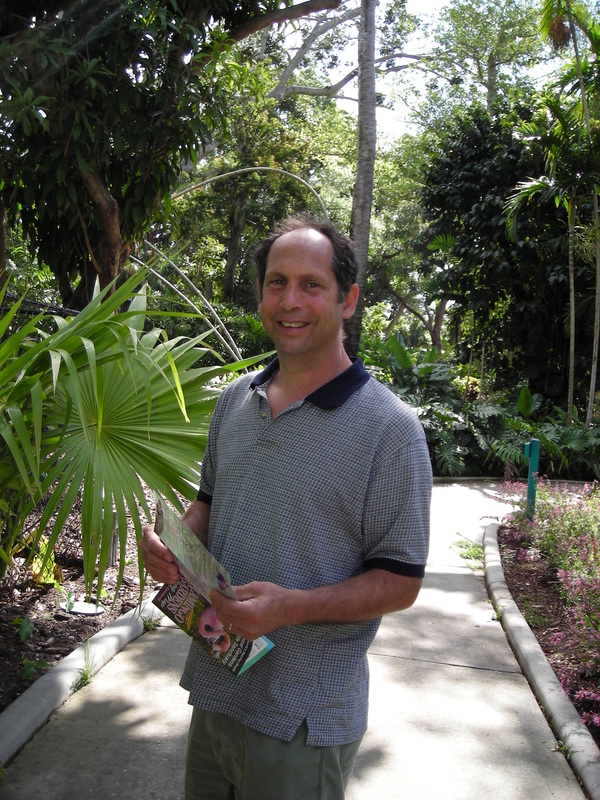
    Hi I am Ed Shozen Haber an authorized teacher of Zen in the lineage of Shodo Harada Roshi of the One Drop Sangha.  By the way I look a bit older now.

    Categories

    All
    Bodhisattva
    Bodhisattva Vows
    Buddhism
    Dogen Zenji
    Genjo-koan
    Heart-sutra
    Heart Sutra Commentary
    Hinayana
    Hsin Hisn Ming Commentary
    Hsin Hsin Ming
    Koans
    Mahayana
    Meditation
    Sesshin
    Song Of Zazen
    Song Of Zazen Commentary
    Tanden
    Zazen
    Zen

    Archives

    February 2024
    December 2023
    December 2019
    November 2019
    February 2019
    October 2018
    July 2018
    June 2018
    May 2018
    April 2018
    March 2018
    February 2018
    January 2018
    December 2017
    November 2017
    October 2017
    September 2017
    August 2017
    July 2017
    June 2017
    May 2017
    April 2017
    March 2017
    February 2017
    January 2017
    December 2016
    November 2016
    October 2016
    September 2016
    July 2016
    June 2016
    April 2016
    March 2016
    February 2016
    December 2015
    November 2015
    October 2015
    August 2015
    July 2015
    June 2015
    May 2015
    April 2015
    March 2015
    February 2015
    January 2015
    December 2014
    November 2014
    October 2014
    September 2014
    August 2014
    July 2014
    June 2014
    May 2014
    April 2014
    March 2014
    February 2014
    January 2014
    December 2013

    RSS Feed

Proudly powered by Weebly
Photos from Mot the barber, BurnAway